|
|
 GeoAstro Applets |
 Astronomy |
 Chaos Game |
 Java |
 Miscel- laneous |
 Physics Quiz |
 Who is Who ? |
Moon Applet
| Month | Date | Year | UT |
 |
|||
Use
the
key "d" to increase the date, or shift key and "d" to decrease
the date,
use the key "y" to increase the year, or shift key and "d" to
decrease the year,
click into the applet first !
The
planet
name in brackets following the date is the ruler of the day.
The Golden Number of
a year is its remainder after division by 19, plus 1.
The epact
is defined as the age of the moon on January 1 in days
(since an "official" new moon),
which may be different from the "true" (astronomical) age of
the moon.
How
to compute the date of Easter by the epact.
Use the Data button to show the New Moon or Full Moon times and lunations for the year selected:
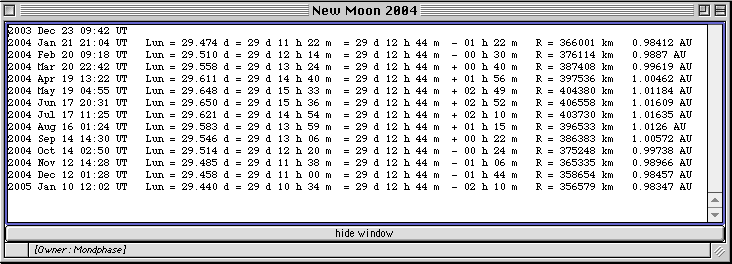
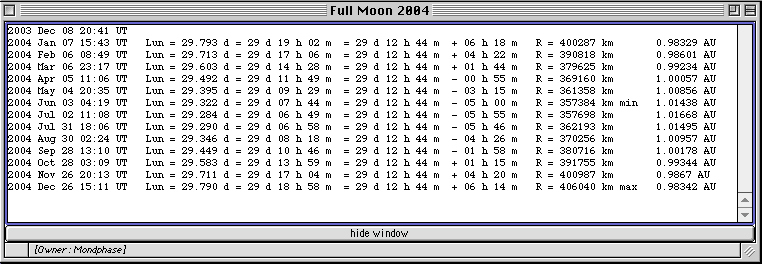
The
mean error of the
New Moon and Full Moon times for 2004 and 2005
compared to the times by USNO is less than 2 minutes.
More Moon applets: Azimuth of the
Sun and the Moon at rise or set Longitude and orbit of the Moon
More details:
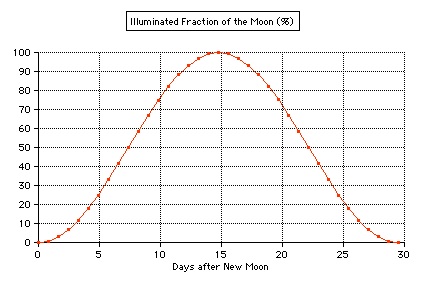
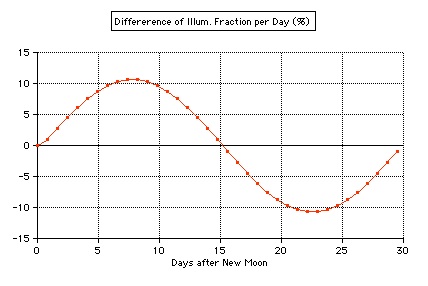
Diagram
of
time intervals between consecutive New Moons (duration of the
lunation)
for 2004,
January to 2025, September.
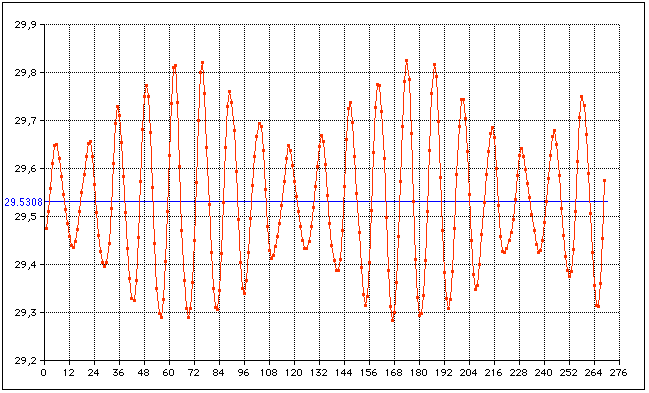
The mean value of 269 lunations is 29.5295 days.
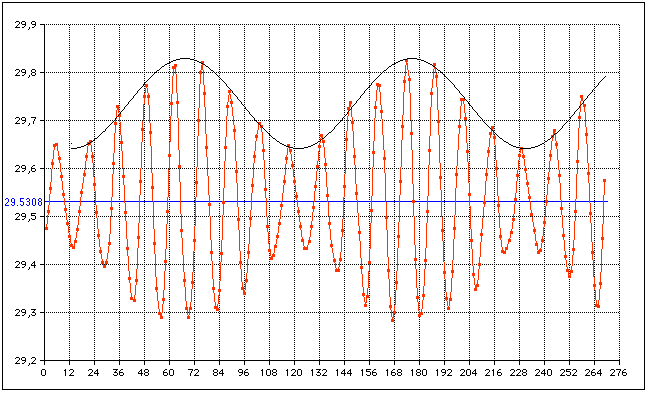
The mean value for a long time is 29.530589 days = 29 days 12 hours 44 minutes 03 seconds (synodic month).
Extreme
lunations: Moon apogee Dec 25, Jan 28 Moon perigee Jun 06, Jul 04
to 1974, Jan 23, 11:04 UT
= 29 d 12 h 44 m + 7 h 12 m
Earth perihelion Jan 04
to 2035, Jul 05, 10:02 UT
= 29 d 12 h 44 m - 6 h 04 m
Earth aphelion Jul 05
The variation is due to the excentricity
of the Earth's orbit. The lunation will have its greatest
possible duration when, at the instant of New
Moon, the Moon is near its apogee and the Earth is
near its perihelion. The shortest possible
lunation will take place about six months earlier
or later, when at New Moon the Moon is near
perigee and the Earth near aphelion. There is a
period 8.85 years. A detailed discussion:
Jean Meeus: More mathematical Astronomy Morsels,
Willman-Bell, 2002, ISBN 0-943396-74-3
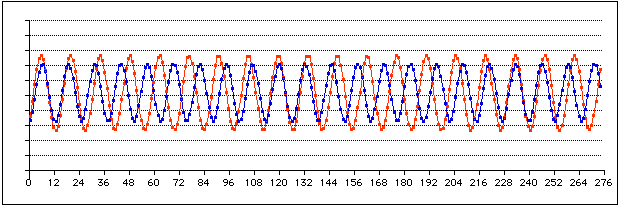
Earth-Moon and Sun-Earth distances
There is a periodicity of 19 years (Metonic
Cycle): 235 lunations = 235 *
29.530589 days = 6 939.688 days with an error of 0.086 days (2 h 4 min).
The 19-year cycle is also close (to
somewhat more than half a day) to 255 draconic
months, so it also is an eclipse cycle.
19 tropical years = 19 *
365.24219 days = 6 939.602 days
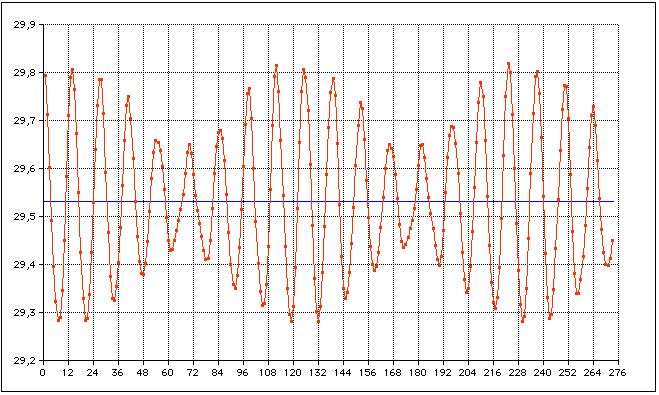
Diagram
of
time intervals between consecutive Full Moons (duration of the
lunation)
for 2004,
January to 2025, September (computed by Planet
Applet)
Diagram
of
time intervals between consecutive ascending node passages
(draconic month)
for 2004, January to 2024, December (computed by Planet
Applet)
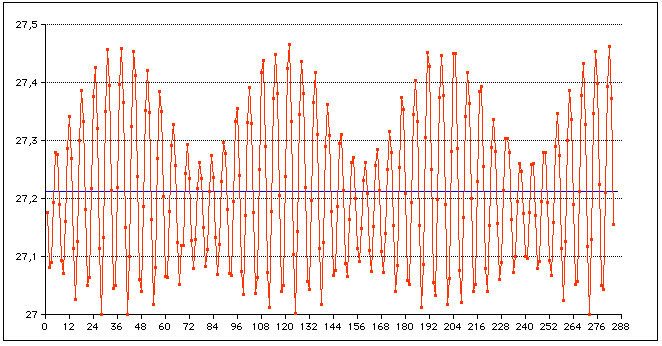
The mean value of 284 ascending node passages is 27.2133 days.
The Saros Cycle:
Synodic Month (New Moon to New Moon)
29.53059 days = 29d 12h 44m Draconic Month (node to node) 27.21222 days = 27d 05h 06m 223 Synodic Months 223 * 29.53059 d = 6585.32 d Å 18 years
10 or 11 d 8 h 242 Draconic Months 242 * 27.21222 d = 6585.35 d Å 18 years
10 or 11 d 8 h
Any two eclipses separated by one Saros Cycle share very similar geometries.
Diagram
of
time intervals between consecutive perigees (anomalistic
month)
for 2004, January to 2025, September (computed by Planet
Applet)
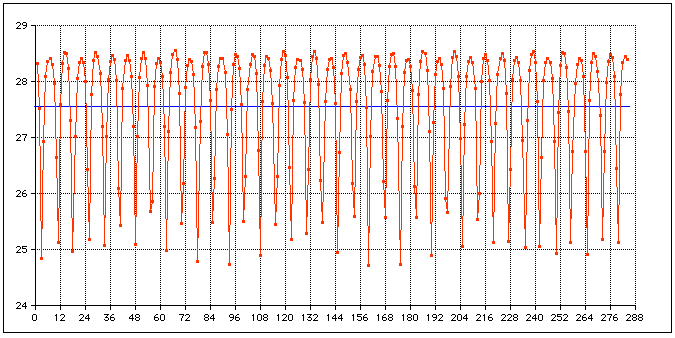
The mean duration of 284 anomalistic months is 27.555 days.
Perigee distances:
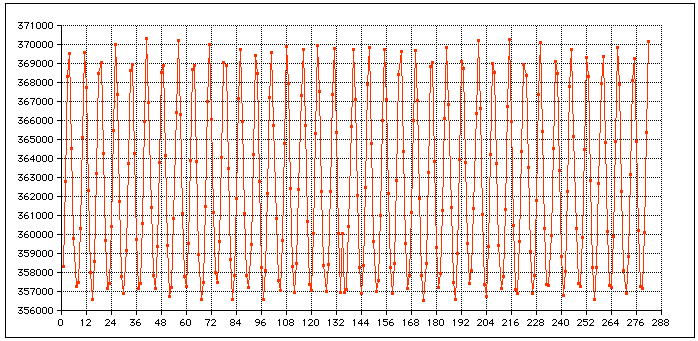
The mean perigee distance of 284 anomalistic months is 362562.4 km.
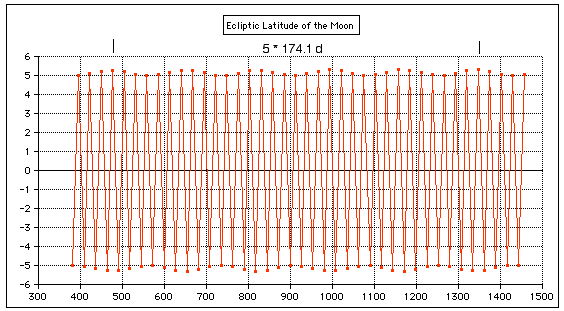
Ecliptic
latitude of the Moon 2005 to 2007
the time axis is: Julian day - 2453000
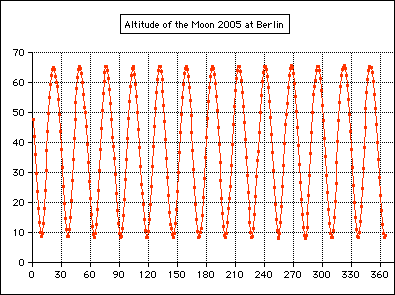
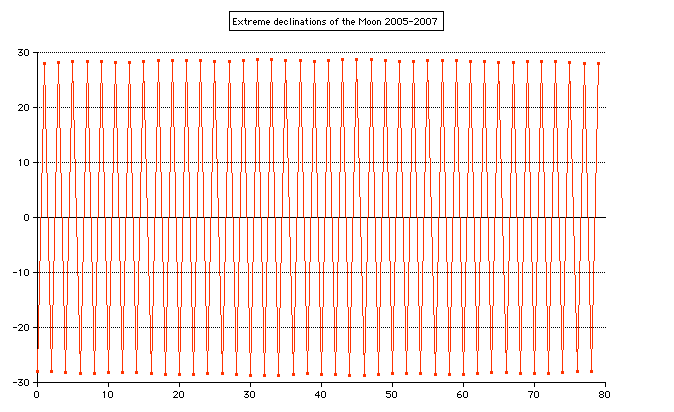
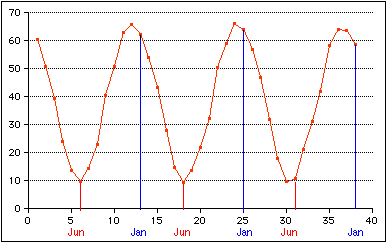
Local transit elevation of subsequent Full Moons, Berlin, 2005-2007
The lowest-hanging full moon in 18 years: 2005, June 21

A Blue Moon is the second full
moon in a calendar month. Usually months have only
one full moon, but occasionally a second one
sneaks in. Full moons are separated by 29 days,
while most months are 30 or 31 days long; so it is
possible to fit two full moons in a single month.
This happens every two and a half years, on
average.
Distance
of
the Full Moon from the Earth

Last Modified: 2023, Oct 06